Malicious PyPI Packages: Detect Supply-Chain Attacks
Detect malicious PyPI packages through provenance, dependency controls, install behavior, network telemetry, hashes, and a Python incident playbook.
 IsMalicious Team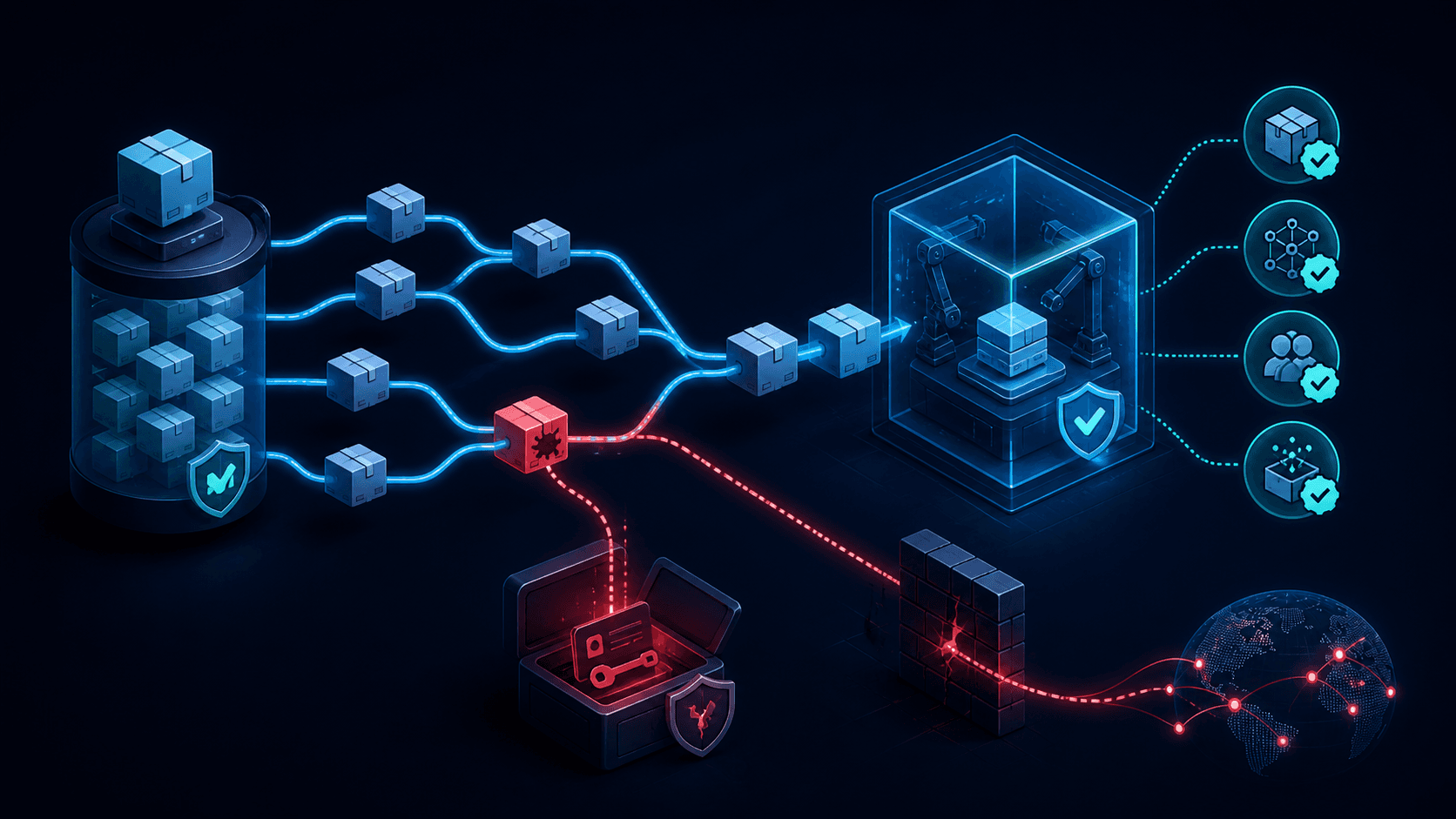
A Python package can execute code during installation, build, import or normal use. That makes the package ecosystem a valuable supply-chain target. Malicious PyPI packages steal credentials, modify builds, install backdoors and contact attacker infrastructure while appearing to be ordinary dependencies.
The defense is not “never use open source.” It is controlled resolution, verifiable publishing, least-privilege builds and visibility from package name to runtime behavior.
Common PyPI Attack Paths
- Typosquatting: a package name resembles a popular dependency.
- Dependency confusion: a public package wins resolution over an internal name.
- Maintainer compromise: a legitimate project ships a hostile release.
- Malicious handoff: ownership or publish rights move to an attacker.
- Install-time execution: build hooks or setup logic read secrets.
- Impersonation: metadata and README copy a trusted project.
Popularity is not proof of safety, and a new package is not automatically malicious. Review must combine provenance and behavior.
Secure Package Selection
Use an approved index or proxy, reserve internal names and prevent unintended public resolution. Commit lockfiles for applications and verify artifact hashes where tooling supports them. Review direct dependency additions and unexpected transitive changes in pull requests.
Record:
- exact name and version;
- source index and artifact hash;
- maintainer and release history;
- build backend and install hooks;
- dependency graph changes;
- known vulnerabilities and malicious-package reports.
The Python Packaging User Guide recommends Trusted Publishing for supported CI/CD platforms, reducing reliance on stored upload tokens.
Detect Suspicious Install Behavior
Dependency installation should not need production credentials. Run it in an isolated, ephemeral environment with restricted outbound access. Alert on:
- reads of cloud, package, SSH or CI credentials;
- subprocess execution from build hooks;
- connections to new or low-reputation domains;
- downloads of second-stage payloads;
- persistence or writes outside the build workspace;
- obfuscated code unrelated to package purpose.
Check artifacts with file hash reputation, destinations with domain reputation, and large candidate sets through bulk lookup.
Publishing Security Matters Too
Use phishing-resistant MFA for maintainers, least-privilege project roles and short-lived publishing credentials. Protect release workflows as production systems. Pin third-party CI actions, review workflow changes and separate build from publish approval.
Trusted Publishing reduces long-lived token risk but does not prove source safety or build integrity. Pair it with attestations and a controlled build process.
Incident Response
When a package is confirmed malicious:
- stop affected builds and deployments;
- preserve wheel, source distribution, lockfiles and logs;
- identify every version and environment that installed it;
- collect process, file and network behavior;
- rotate accessible high-value credentials;
- rebuild from a known-good dependency set;
- report the project and indicators to the index and trusted communities.
Search developer workstations as well as CI. Local test installs may expose broader credentials than production builds.
Avoid Overreaction
Do not declare a package malicious because it is new, minimally documented or uses a compiled extension. Those are risk factors requiring review. Separate vulnerable, abandoned, suspicious and confirmed-malicious states so teams can respond proportionally.
Metrics
Track unapproved package introductions, time to review, builds with unrestricted egress, dependencies without hashes, trusted-publishing coverage, malicious-package detections before release and secrets exposed per incident.
Conclusion
PyPI security depends on provenance, controlled installation and runtime evidence. Apply the lessons from malicious npm package defense to Python while respecting its build model. A package name starts the investigation; hashes, behavior and infrastructure complete it.
Frequently asked questions
- How do malicious PyPI packages reach developers?
- Common routes include typosquatting, dependency confusion, copied install commands, compromised maintainer accounts, malicious updates, and packages that impersonate popular libraries.
- Does a lockfile prevent malicious Python dependencies?
- A lockfile makes resolution reproducible and exposes changes, but it can faithfully pin a malicious version. Teams still need review, provenance, hashes, policy, scanning, and runtime controls.
- What should be rotated after a malicious package executes?
- Assume it may have read environment variables, package tokens, cloud credentials, SSH keys, browser data, and CI secrets. Scope rotation to evidence but begin with high-value credentials available to the process.
Related articles
 SLSA Provenance: Verify the Software Supply Chain
Use SLSA provenance to trace artifacts to source and build systems, verify expectations, improve CI controls, and respond to tampering.
 Malicious npm Packages: Detecting Open-Source Supply Chain Compromise
Malicious npm packages use typosquatting, dependency confusion, install scripts, and maintainer compromise to steal secrets and backdoor builds. Learn practical detection and response.
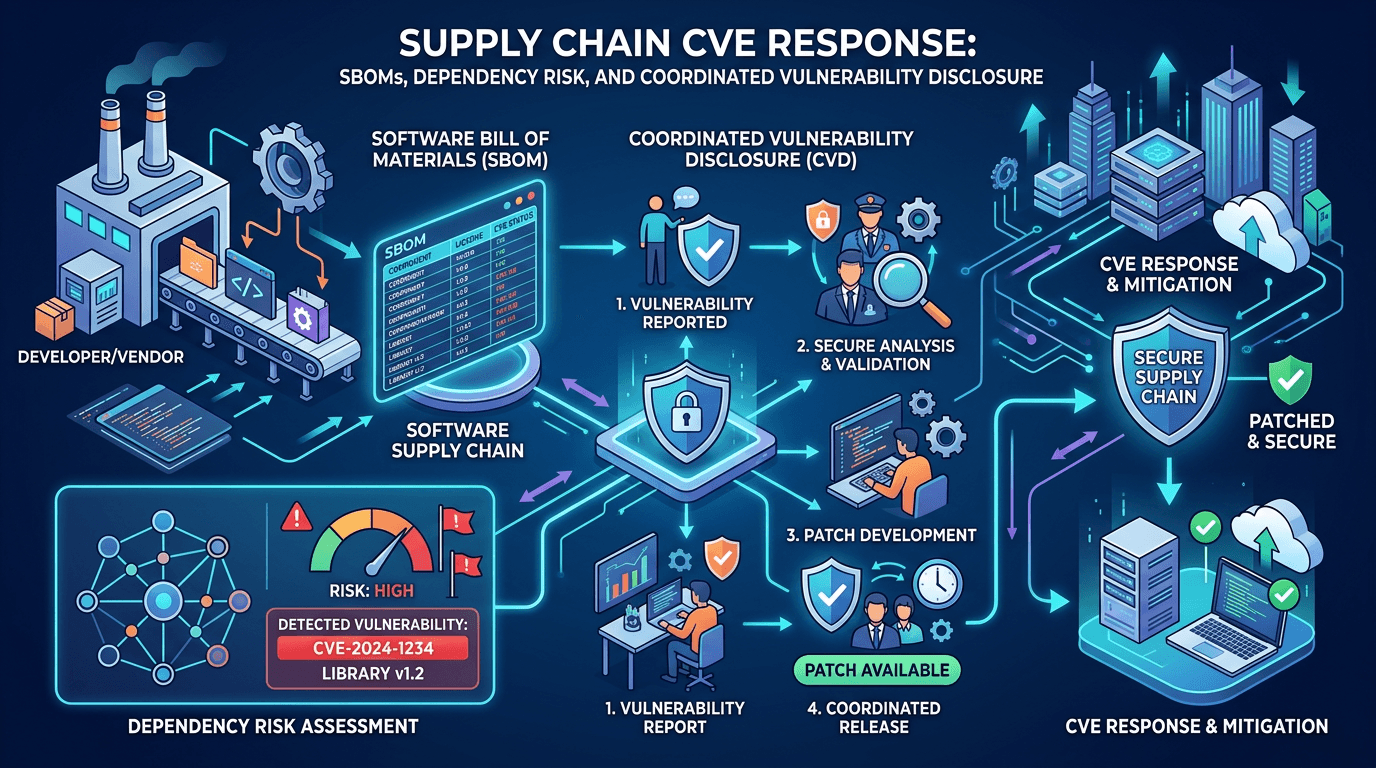 Supply Chain CVE Response: SBOMs, Dependency Risk, and Coordinated Vulnerability Disclosure
Build a modern supply-chain security program: generate SBOMs, map CVEs to components, integrate EPSS and KEV, and coordinate fixes across vendors and open-source maintainers.
Protect Your Infrastructure
Check any IP or domain against our threat intelligence database with indexed records.
Try the IP / Domain Checker